
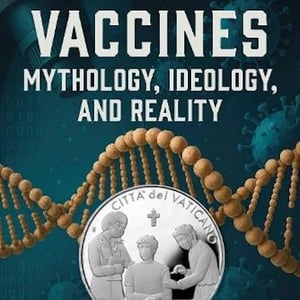
This wonderful book is a historical journey through the centuries and the gradual emergence of both scientific experiments in the field of immunology and the preparation of vaccines, and public health legislation. It is not a book about the pros and cons of vaccination and does not attempt to persuade or convince. It is much more fascinating, in that it explores the raison-d'être of vaccines and the scientists responsible for their evolution, from the first vaccines to the present-day. The scope of the book is huge, covering medical history, cultural and social perspectives through the eras, public health crises and responses (such as that of the stinking River Thames and the construction of London's first sewage system), and the gradual but necessary exposé of the scientific community involved in the creation of the first vaccines, and the shortcuts and half truths that were part of those journeys. Yes, the authors attempt, with the benefit of hindsight, to address some of the more contentious aspects with respect to modern vaccines, but it is done from a historical and educational position, with a view to supporting the dissemination of knowledge and good decision-making for the future. Clearly, blind faith in vaccines is as limiting as anti-vaccination beliefs, but the authors here are asserting that neither of these positions can replace valid critical thinking and robust cost-benefit analysis when it comes to the creation of new vaccines and public health. Spurred on by their own experiences of the SARS-COV19 virus, and the nature of the global response, the authors aim to separate fact from fiction in a measured and illuminating way. In the process, they have produced a really absorbing and thought-provoking read. A book for our times!
Sorry, we have temporarily suspended delivery to Germany.
Please email order@helios.co.uk for more information.